
Why Do Non Stick Pans Not Last?
- Morgs Pots
- 3 hours ago
- 6 min read
You buy a non-stick pan because weeknight cooking should be easy - eggs should slide, pancakes should lift cleanly, and washing up should take minutes, not ages. So when people ask why do non stick pans not last, the short answer is this: they are doing a hard job on a surface that gradually wears down with heat, friction and everyday use.
That does not mean every pan fails quickly, or that every home cook is doing something wrong. It means non-stick performance has limits, and those limits show up faster when a pan is exposed to high heat, rough utensils, sudden temperature changes or poor storage. If you understand what shortens a pan’s life, you can make better choices and get far more value from your cookware.
Why do non stick pans not last in real kitchens?
In a showroom or on a product page, a pan looks flawless. In a real kitchen, it is heated, cooled, stacked, scrubbed, packed away and used for everything from a quick fried egg to a full family stir-fry. That daily cycle matters.
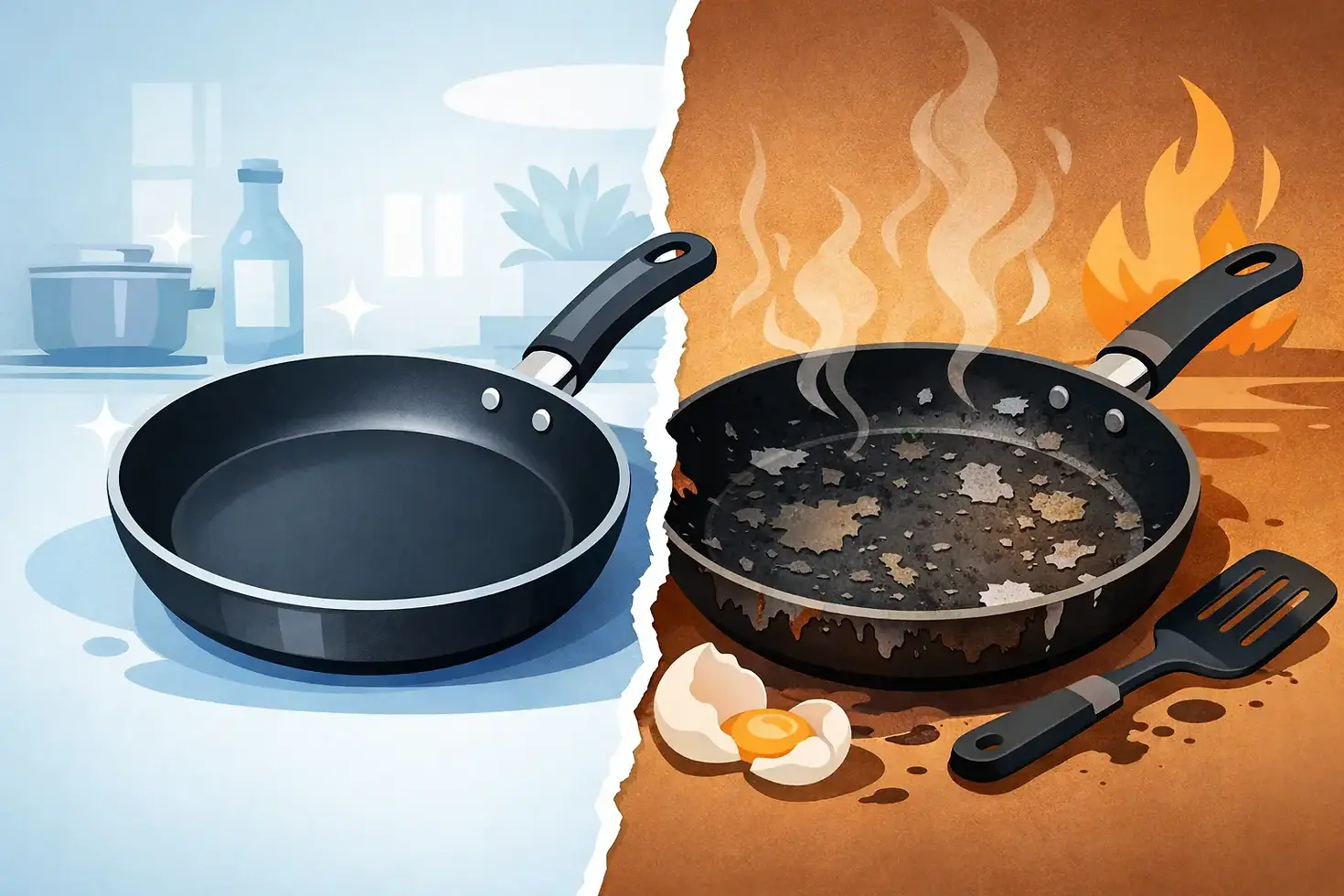
The biggest reason non-stick pans lose performance is surface wear. Every time food is moved around the pan, every time oil heats up, and every time the pan is cleaned, the cooking surface changes a little. You may not notice it at first. Then one day the scrambled eggs that once slipped straight out start hanging on around the edges.
Heat speeds this up. Many people think hotter means better, but non-stick surfaces usually perform best at low to medium heat. Push a pan too hard, too often, and the surface can deteriorate sooner. That is especially common when preheating an empty pan until it is very hot or using high flame that climbs up the sides.
Then there is simple abrasion. Even careful cooks create friction. Metal utensils, rough scouring pads and stacking pans without protection all add up over time. None of these moments alone may ruin a pan, but together they chip away at the smooth release people expect.
Heat is usually the main culprit
If there is one habit that shortens a pan’s lifespan more than most, it is overheating. Non-stick cooking is not meant to work like a screaming-hot sear pan. It is designed for controlled, efficient cooking where food releases easily and clean-up stays simple.
A lot of home cooks use too much heat because they are in a rush or because that is how they have always cooked. On gas, the flame may lick up the sides. On induction, the jump in temperature can be faster than expected. On a BBQ, heat can be less even and easier to overdo. For caravanning and camping, this matters even more because outdoor cooking setups can be less forgiving.
Once a pan is repeatedly overheated, its surface may stop performing the way it did when it was new. Food starts sticking more, browning becomes patchy, and cleaning takes more effort. At that point, people often think the pan was poor quality from the start, when in reality the issue may be the mismatch between the pan and the heat level used.
Why some pans seem to wear out much faster
Not all non-stick cookware ages at the same pace. Build quality, base construction and surface design all make a difference. A lighter pan can heat up quickly, which sounds handy, but it can also create hot spots and temperature spikes that put more stress on the cooking surface.
A sturdier pan tends to hold and spread heat more evenly. That can mean more forgiving cooking and less sudden stress during everyday use. For households cooking breakfast every morning, reheating leftovers at lunch and knocking together dinner at night, that extra stability matters.
This is one reason many cooks move towards more durable pan designs when they are tired of replacing cookware too often. They want the easy-clean convenience, but they also want a pan that feels dependable across different heat sources and different styles of cooking.
The little habits that quietly shorten lifespan
Most pan damage does not come from one dramatic mistake. It comes from small habits repeated often.
Putting a hot pan straight under cold water is a common one. It feels efficient, but sudden temperature changes can stress the pan and affect its long-term performance. The same goes for stacking cookware directly on top of each other in a cupboard, caravan drawer or camp kit without any protection in between.
Utensils matter too. If you are scraping hard at stuck-on bits, you are already working against the surface. Gentle tools and a softer touch usually go much further. Cleaning products also matter. Harsh scrubbers may remove residue, but they can also wear away the smooth finish you rely on for easy cooking.
Even cooking spray can play a part. Some sprays leave behind residue that builds up over time and interferes with food release. A small amount of oil or butter applied properly is often the better choice.
Why do non stick pans not last as long as people expect?
Part of the frustration is expectation. Non-stick pans are often sold as a fix for everyday cooking problems, so people naturally hope they will stay perfect for years. But a pan used constantly for eggs, fish, toasties and quick dinners is a working tool, not a decorative piece.
It also depends how you use it. If a pan only comes out for the occasional omelette, it may keep its easy-release feel much longer. If it is the one pan doing nearly everything in the kitchen, including tasks better suited to heavier cookware, wear will show sooner.
There is also the question of what "not lasting" means. For some people, the pan is only a problem once food sticks badly. For others, even a slight drop in glide is disappointing. That is why two cooks can own similar pans for the same amount of time and have very different opinions on durability.
How to make a non-stick pan last longer
The good news is that a few simple changes can extend the life of your pan quite a bit. Keep the heat moderate, especially when preheating. Let the pan warm gradually rather than blasting it from cold. Use utensils that are gentler on the surface, and wash with a soft sponge once the pan has cooled.
Storage deserves more attention than it gets. If your cookware lives in a tight kitchen cupboard, a caravan setup or a camping bag, nested storage needs some care. A lined carry bag or soft layer between pans helps reduce rubbing and knocks. It sounds minor, but repeated contact during transport or storage can be surprisingly hard on cookware.
It also helps to match the pan to the job. Non-stick is brilliant for delicate foods and fast everyday meals. It is not always the best choice for every high-heat cooking task. When you use the right pan for the right style of cooking, everything performs better and lasts longer.
A more durable option for everyday cooks
For many Australian households, the real issue is not whether non-stick is convenient. It absolutely is. The issue is whether that convenience can come with better durability, especially when cookware is used across gas, induction, electric cooktops and outdoor setups.
That is where better construction becomes worth looking at. A well-made pan with a durable stainless steel body and a smart cooking surface can offer a more practical middle ground - easier release and cleaning, with more strength for regular use. For people cooking at home, on the road, or anywhere in between, features like removable handles and compact nested storage are not just nice extras. They make daily use and storage easier, especially in caravans, campers and smaller kitchens.
At Morgs Pots, that practical balance is the whole point. People want cookware that feels premium, works hard and stores neatly without turning cooking into a fuss.
The best way to think about non-stick lifespan
A non-stick pan is a bit like a favourite pair of runners. If you use them constantly, push them hard and never really look after them, they will show it. If you use them for what they are designed to do and treat them well, they will serve you much longer.
So if you have been wondering why do non stick pans not last, the answer is not that they are useless. It is that performance depends on heat, handling, build quality and expectations. Choose carefully, cook a little more gently, and your pan has a much better chance of staying your go-to for everyday meals. Happy cooking!


Comments