

Guide to Honeycomb Frying Pans for Everyday Cooking
- Morgs Pots
- 11 minutes ago
- 5 min read
A pan that cooks a golden breakfast at home should also earn its spot in the caravan cupboard. This guide to honeycomb frying pans is for cooks who want reliable browning, easier clean-up and less packing drama, whether dinner is happening on the stovetop, the BBQ or beside the campsite.
Honeycomb frying pans bring together a durable stainless-steel cooking pattern with the easy food release people want for everyday meals. The result is cookware that feels capable enough for a proper steak, yet practical enough for eggs, grilled sandwiches and a quick weeknight stir-fry. Better still, when the handle removes and the pans nest together, a compact kitchen can feel far more organised.
What makes a honeycomb frying pan different?
The key feature is the raised stainless-steel honeycomb pattern across the cooking surface. It creates a protective framework over the non-stick surface, helping the pan stand up to regular cooking while still making food easier to lift and serve. That matters when you are moving from soft scrambled eggs in the morning to seared chicken or vegetables at night.
It is not a magic fix for every cooking habit. A good pan still needs sensible heat, a little oil where the food calls for it, and cleaning that does not leave burnt-on residue to build up. But compared with a standard non-stick pan, the stainless-steel pattern gives you more confidence to cook a wider range of meals without treating the pan as fragile.
For Australian households, campers and caravanners, versatility is a major win. A quality honeycomb frying pan can move between induction, gas and electric cooktops, then work on a BBQ when the weather is right. Check the care instructions for your particular pan and cooking setup, especially if you are using a portable stove or uneven outdoor surface.
Choosing the right honeycomb frying pan
The best choice depends less on what looks impressive in the cupboard and more on how you actually cook. A smaller frying pan is brilliant for eggs, toasties, a couple of burgers or a quick lunch for one or two. A larger pan gives families room for a big breakfast, a batch of mince, fish fillets or vegetables without crowding the food.
Crowding is worth avoiding. When too much food goes into a pan at once, temperature drops, moisture collects and ingredients tend to steam rather than brown. If you love crisp bacon, caramelised onion or properly coloured chicken, choose a size that gives the food breathing room.
Why removable handles make a real difference
A removable handle is more than a clever storage feature. It makes it easier to stack cookware neatly, particularly in the limited cupboards of a camper, caravan or RV. Nesting pans can be packed into a lined carry bag, helping prevent rattles and protecting the cooking surfaces while you travel.
It also gives you flexibility around the cooking area. Remove the handle after cooking when space is tight, or when you need to store the pan neatly rather than leave it taking up bench room. Always make sure the handle is firmly attached before lifting a pan containing hot food, and avoid treating it as an afterthought when cooking outdoors.
Think about your heat source
If your kitchen uses induction, confirm the pan is induction compatible. If you cook on gas, electric or a BBQ, a flat, stable base and gradual heating will help you get the best result. For camping, a portable gas stove can give you valuable extra cooking space, especially when breakfast has eggs in one pan and bacon or mushrooms in another.
On a double-burner setup, it is worth checking that your larger pans sit securely side by side before you start cooking. A well-planned camp dinner is much easier when you are not constantly shuffling pans around a cramped cooking station.
How to cook well with honeycomb frying pans
The biggest mistake people make with any quality frying pan is turning the heat straight to high. High heat sounds efficient, but it can make food catch before the centre is cooked and can leave stubborn residue behind. Medium heat is your best starting point for most meals.
Let the pan warm for a minute or two, then add your oil or butter. Once it is hot, add the food and give it time to develop colour before moving it. If chicken, fish or vegetables are sticking, they may simply need another moment to release naturally. Trying to force them loose too early usually tears the food and leaves more behind in the pan.
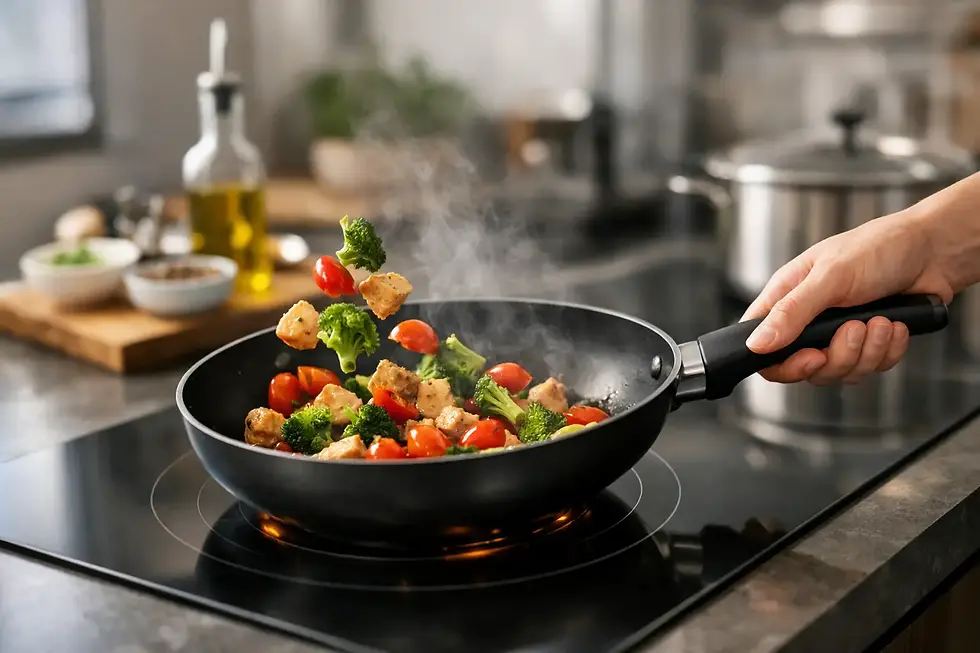
For eggs and delicate foods, use low to medium heat and a small amount of fat. For steak, burgers or firm vegetables, preheat steadily and use medium to medium-high heat if your cooktop requires it. The right setting varies between induction, gas and electric, so use the food as your guide: you want an active sizzle, not clouds of smoke.
A few everyday meals show where these pans shine. Cook a caravan breakfast with eggs, bacon and tomatoes using controlled heat for a calm, easy clean-up. At home, brown mince for tacos, then add your sauce once the meat has developed flavour. On the BBQ, sauté capsicum, zucchini and onion while your main meal cooks alongside. Simple food benefits from a pan that heats evenly and gives you control.
Cleaning and care that keeps the pan performing
Easy clean-up starts before the washing-up. Do not leave a hot, empty pan sitting over heat, and do not let burnt food stay in it until morning. Once the pan has cooled enough to handle safely, wash it with warm water, a soft sponge and a little washing-up liquid.
If food residue remains, soak the pan briefly rather than attacking it with harsh scouring tools. A gentle scrubber and patience will do a better job. Dry the pan before stacking it away, particularly when it is being packed in a carry bag for a trip.
Oil is useful, but more is not always better. Too much oil can leave a sticky film over time, particularly if the pan is regularly heated hard. Use enough for the meal you are making, wipe away excess after cooking and keep your heat sensible. These small habits make a noticeable difference over hundreds of meals.
When travelling, make sure the pan is fully cool and dry before removing the handle and nesting it with the rest of your cookware. Place the set in its lined storage bag so it is ready for the next stop, not rattling around in a cupboard while you are on the road.
When a honeycomb frying pan is worth it
Honeycomb cookware suits cooks who want fewer compromises. You may be feeding a family on a busy Tuesday, cooking a fry-up at a beachside campsite or building a more capable caravan kitchen. In each case, you need a pan that is easy to use, stores sensibly and handles more than one style of cooking.
It may not suit someone who wants the lightest possible pan for occasional reheating, or someone who prefers to cook every meal at full blast. Premium cookware rewards a little care. In return, it can become the pan you reach for most often because it handles everyday food without fuss.
Morgs Pots is built around that practical confidence: quality honeycomb cookware designed to work hard in home kitchens and travel kitchens alike. Start with a familiar meal, keep the heat moderate and enjoy the difference a well-made pan can make. Happy cooking!


Comments